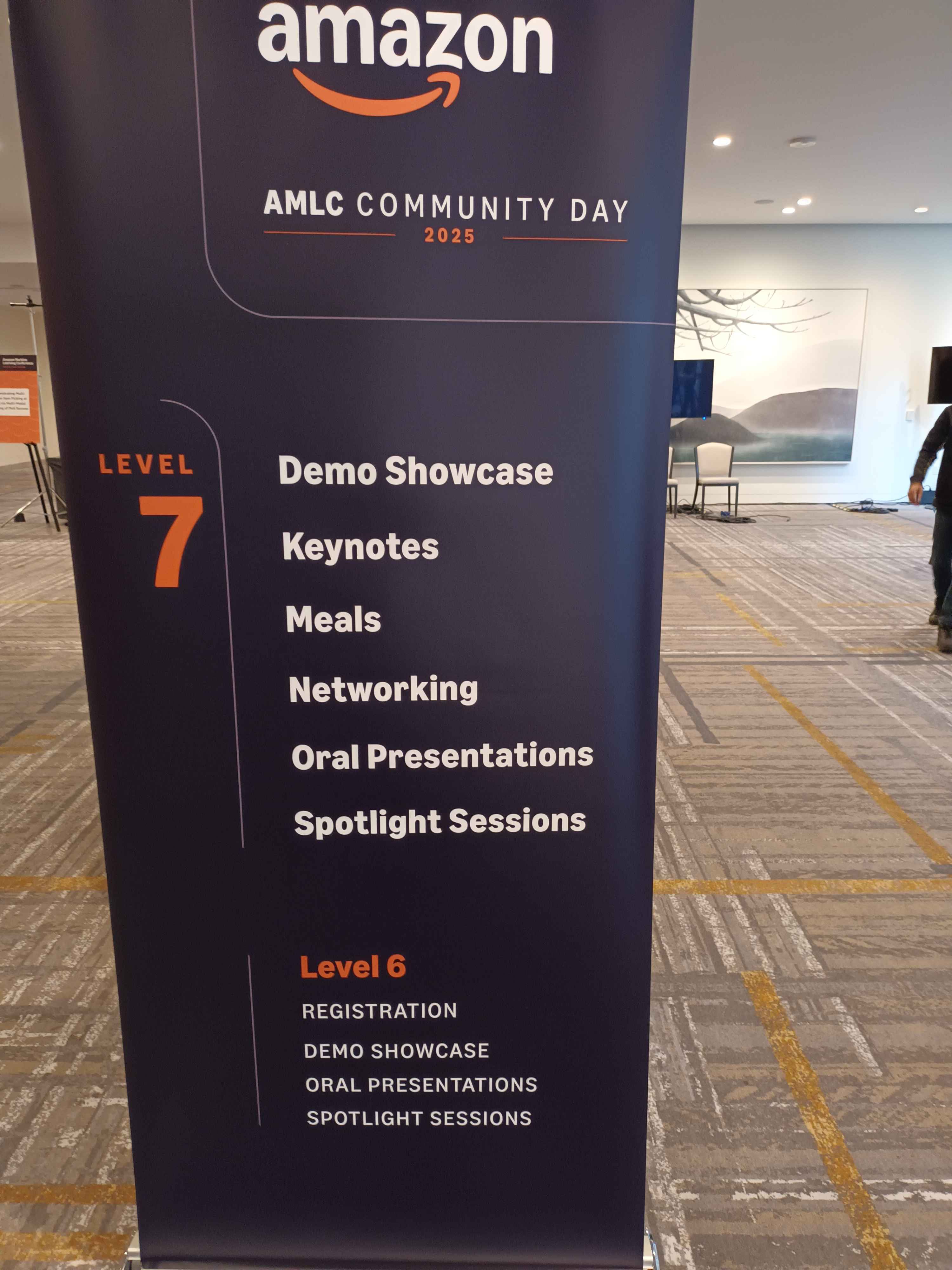
There is a keynote presentation from professor Wojciech Matusik
He aim to establish an extensible, community-contributed metamaterial design platform and promote the application and research of VLM in the field of material design.
This ecosystem comprises three core components:
MetaDSL: A domain-specific language specifically designed for metamaterial structural design, capable of describing structural modules, geometric evolution, infill methods, etc.
MetaDB: A database based on the MetaDSL program. Each record includes DSL code, corresponding 3D geometry, rendered images, multi-view images, and simulated or computed physical performance.
MetaBench: A benchmark suite for evaluating VLM in various tasks in metamaterial design (such as structural reconstruction, physical understanding, and reverse design), providing standard tasks, input/output formats, and evaluation metrics.
In addition, this proposal also includes an interactive interface or auxiliary system (such as MetaAssist) enabling users/models to interact across language, images, code, and geometry.
For the paper “MetamatBench“, my reviews are as follows:
The proposed system is structured into three main components: (1) standardization of metamaterial input, (2) implementation of 17 machine learning (ML) models, and (3) a graphical user interface (GUI).
Regarding the first component (input standardization), this aligns well with my parallel research on heat-kernel representation, which is promising. However, I have significant reservations about the overall approach, particularly the feature engineering strategy. The authors propose six groups of features, each potentially multi-dimensional. This raises two primary concerns:
Scalability: The framework appears difficult to extend. Integrating new features seems cumbersome and not scalable for future developments.
Dimensionality: This results in a very high-dimensional input space, which is often suboptimal for efficient metamaterial prediction and design due to the curse of dimensionality and increased computational cost.
Regarding the second component (ML models), this essentially serves as a benchmark study. It is unclear how a general benchmarking of existing models contributes specific value to the goals of our NSF project. We should clarify the unique contribution here.
Finally, the third component (GUI) is primarily a user interface design task. If our intention is to leverage CompositeAI as the interface, we likely have the capability to provide a superior and more integrated solution than what is proposed here.